The signal chain
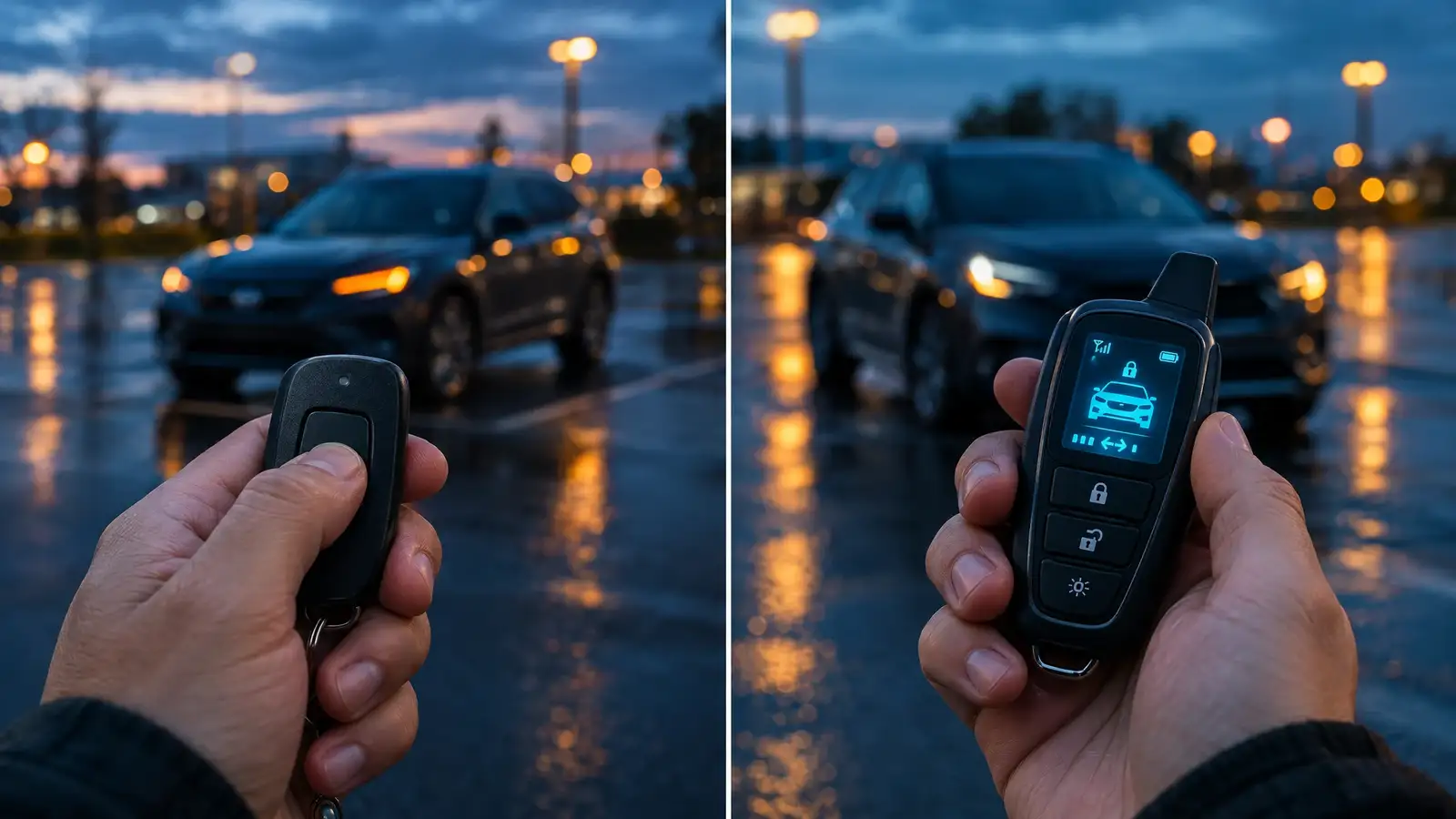
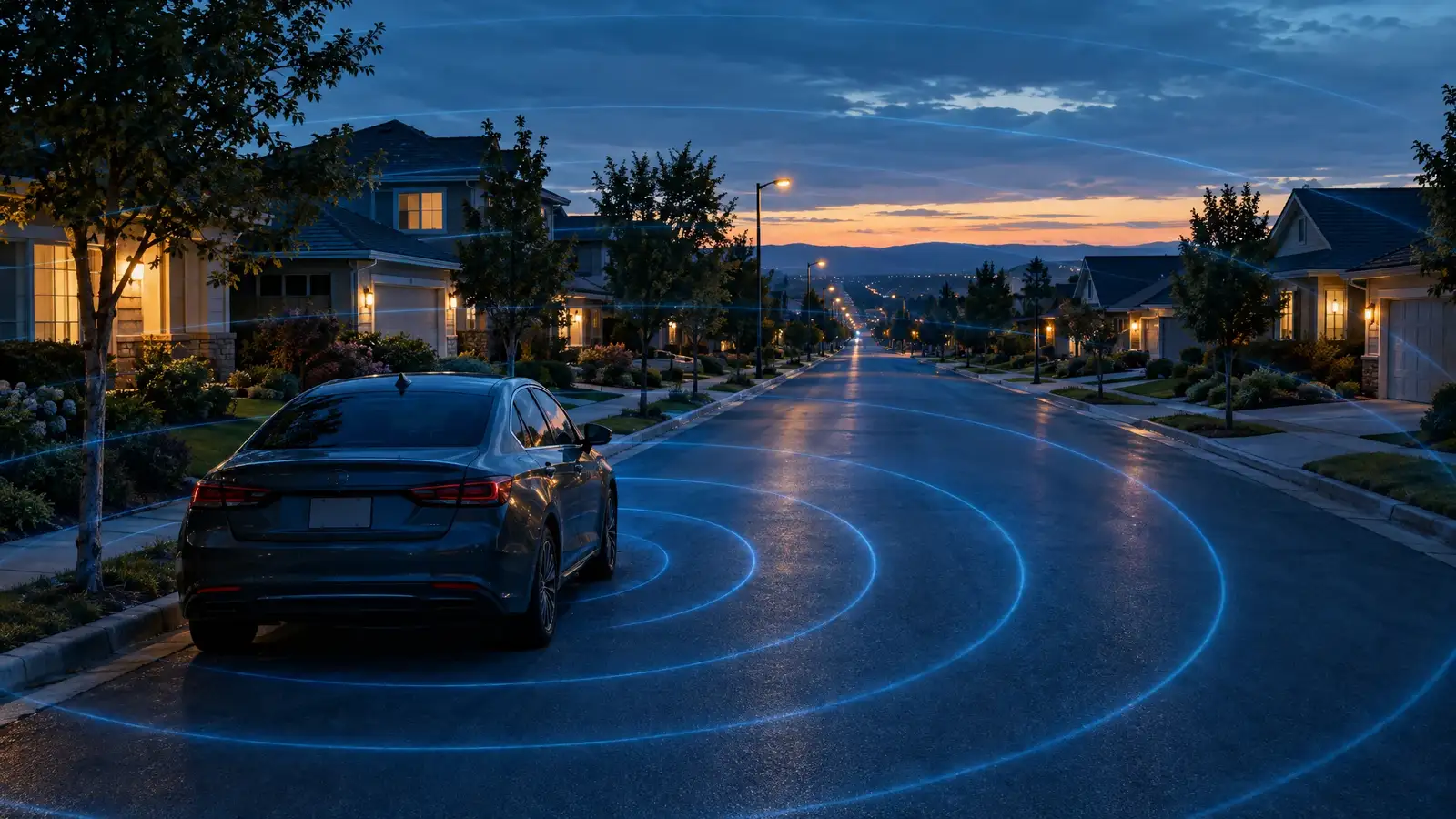
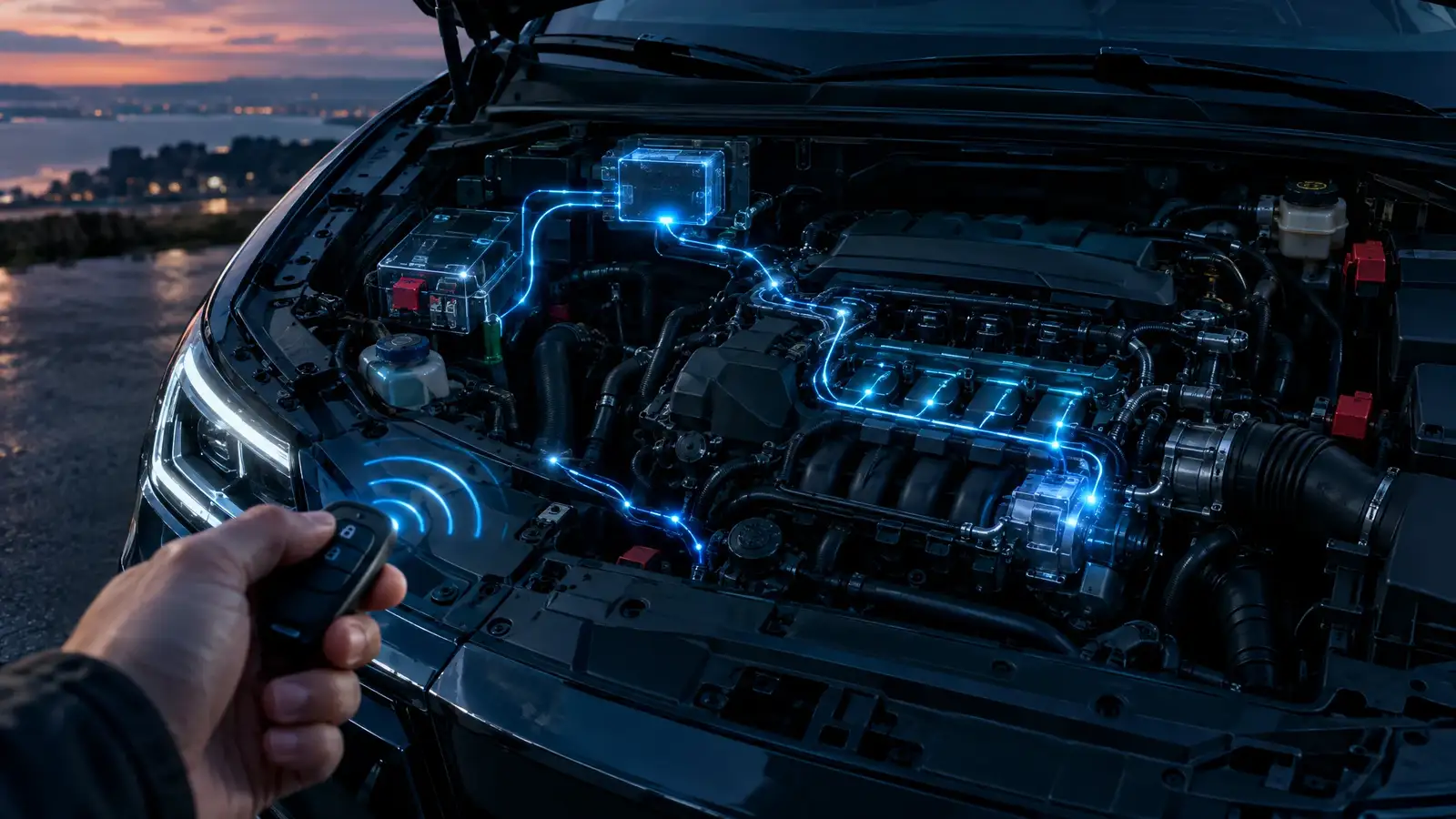
When you press the remote start button, the remote sends a coded radio message. An antenna in the vehicle passes it to a control module, which checks that the code is yours, then begins a start sequence.
The module turns on the ignition and accessory circuits, waits a moment for the fuel pump to prime and then cranks the starter just as a key would. It keeps the engine running for a set runtime and then shuts it down.
Why the key is not in the ignition
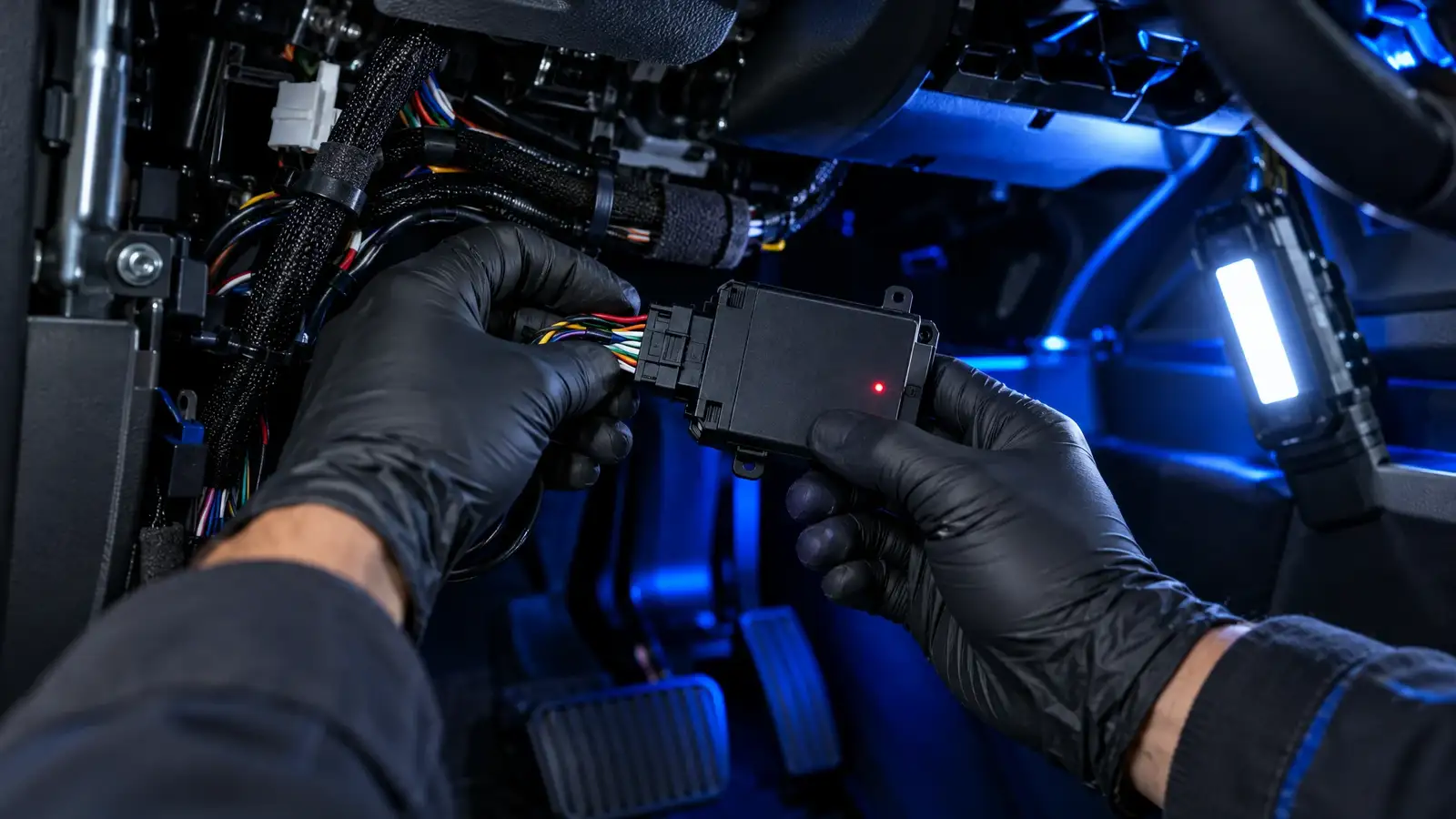
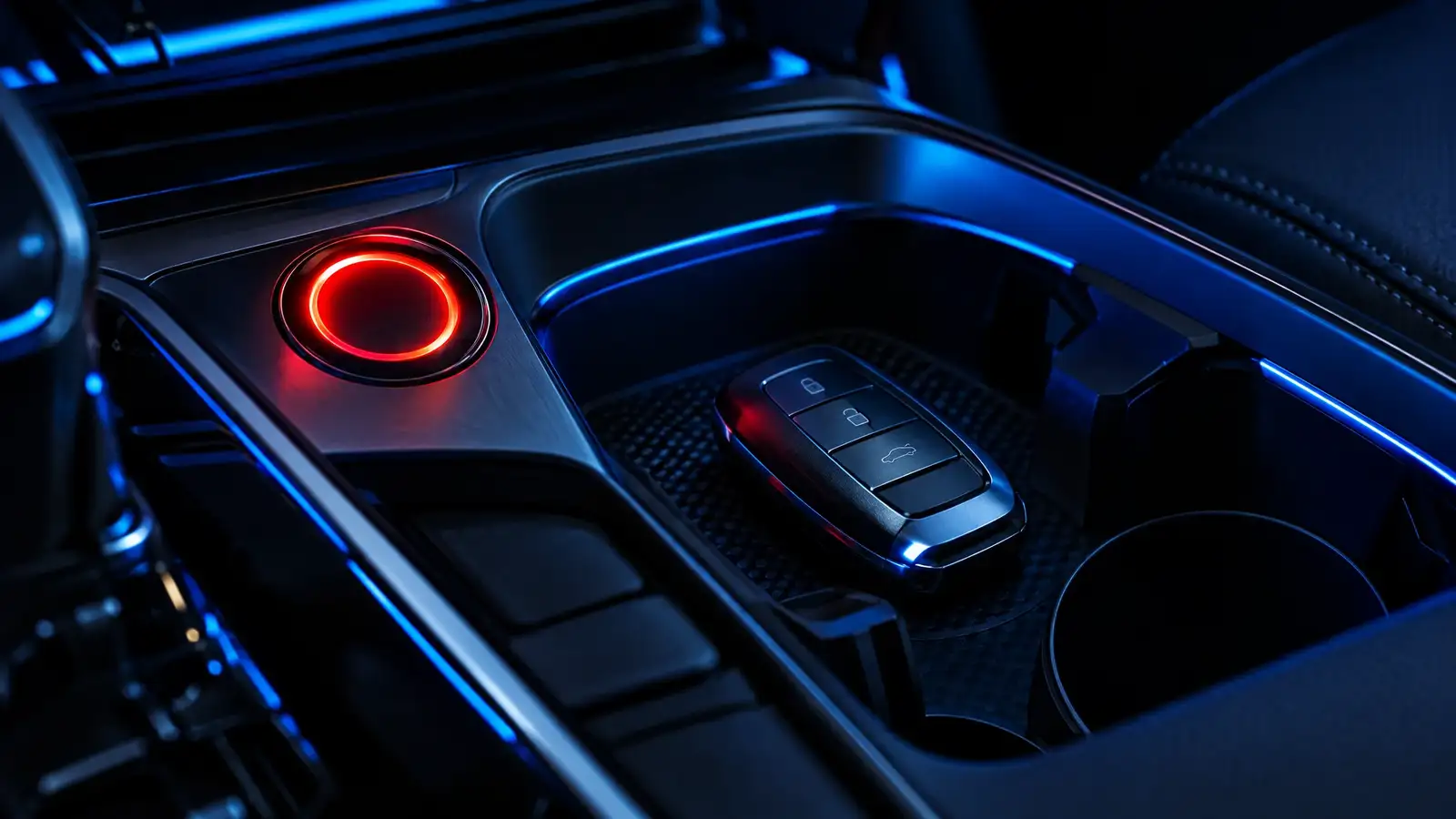
A car is supposed to need its key to run, so a remote start has to give the vehicle a safe stand-in for the key. On older vehicles that is done through the ignition wiring. On newer vehicles an interface or bypass module tells the immobilizer the key is present for the duration of the remote start.
The vehicle still cannot be driven. As soon as the brake pedal is pressed without the key, or a door is opened, the engine shuts down.
The safety circuit
Remote start systems watch the brake, the hood, the parking-brake state and the gear selector. If any of those say something is wrong, the engine stops. Those inputs are why a good install takes time.
It is also why we test every shutdown before we leave.
A simple way to picture it
Think of remote start as a polite robot that does what you do at the ignition, in the right order, and then checks that nothing unsafe is happening. It primes, it starts, it holds the engine at idle, and it stops the second the vehicle says someone is in charge.
Everything else, from range to screens, is about how your command gets to that robot and how its answer gets back to you.
Quick answers
Can someone drive away with a remote-started car?
No. Pressing the brake without the key in the ignition shuts the engine down.
How long does the engine run?
The runtime is set by the installer, within the system’s options.